Airport Bums
2D1. That’s the airport identifier for the place I felt most at home. A sod airfield in eastern Ohio, right down the street from the original Taylorcraft factory, with weed-laden rusted hangars and old men with (sometimes) humble passion.
I first went to Barber Airport when I was about ten, for a Young Eagles rally. Forrest, the man who owned and ran the field, took me up himself. I don’t remember much about the flight except the feeling: total, instant clarity. I was hooked the minute we slowly left the ground. A few years later I started flight lessons there, and Forrest looked at me like he recognized something. “You’ll be seeing a lot of me,” he said. His theory was simple. Hang around the airport long enough and the knowledge soaks in by osmosis. So that’s what I did. I just kept showing up.
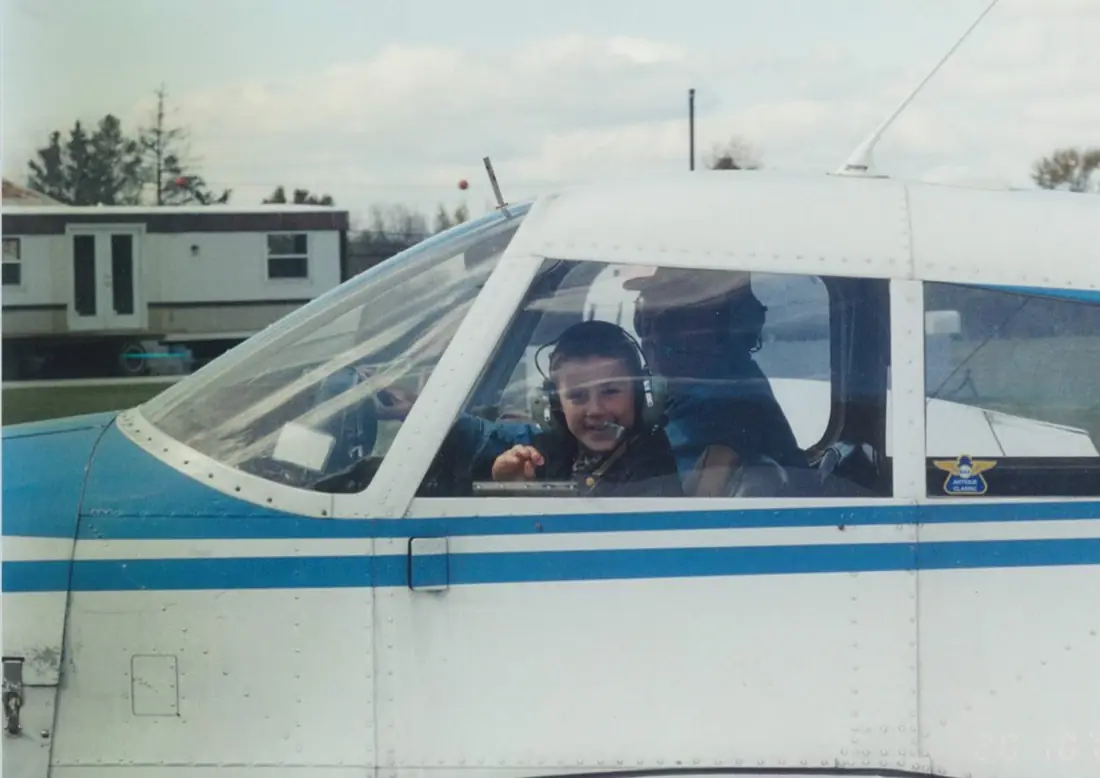
I was not a kid who was easy in most rooms. I loved airplanes more than I knew how to talk to people, and I was aware of the gap. I also wasn’t a kid with money. Flight lessons were a stretch, and nobody was bankrolling a hobby. So I did what the airport bums did: showed up, made myself useful, and soaked up whatever I could. At Barber, that was enough. Nobody needed me to be charming or well-off. They needed me to hand them the right wrench, hold a flashlight steady, or shut up and listen when someone was telling a story worth hearing. The age difference between me and everyone else was about forty years, and somehow that made it easier. They didn’t care that I was quiet. They cared that I cared enough to keep coming back.
Summer mornings at Barber were cool and foggy, the mist hanging over the grass until the Ohio sun slowly lifted it. After that it was just… hot. As the heat built, the old corrugated hangar doors would start to creak and groan, expanding in the sun, a slow metallic rhythm amidst the cars flying by along State Route 225. Sometimes the first thing you’d hear was radio chatter drifting from an open hangar, followed by the hopeful sputter of an old Continental engine trying to clear its throat.
And then Cannonball would show up.
By the time I knew him, his professional flying days were well behind him, but he’d earned the title of dedicated airport bum and wore it with quiet pride. He’d pull in around nine every morning, his 90s Cadillac announcing itself with the whine of a bad timing belt as it crunched down the gravel road. He’d swing the door open, hobble over, and plant himself on the porch dispensing opinions to anyone around before napping with his chin on his chest, soaking up the sun like a lizard on a rock. Around five he’d stir and drive off, giving every impression that he’d completed a full and important day’s work. His stories weren’t dramatic. They were slow, dry, often filled with tangents, but full of small details that eventually added up to something real. I could (and often did) just sit with him for hours.
Lunch usually meant a trip to Shorty’s, the greasy spoon down the road. The coffee tasted like jet fuel, and nobody seemed to mind. Forrest never met a stranger there. If he didn’t know someone, he would by the time the check came. For me those trips were a kind of social education I didn’t know I needed. You sit with a handful of old pilots over bad coffee long enough, and you start to learn how to be in a room with people. How to listen. When to talk and when not to.
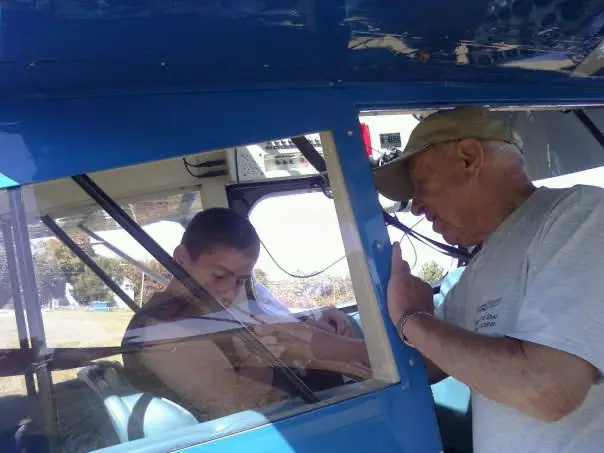
The immersion happened gradually, in small initiations. With a whole cast of folks. The lessons came from everywhere.
Billy waved me over to his Citabria one afternoon. “That’s ‘Airbatic’ spelled backwards, get it?” he said, grinning, wearing his uniform of well-worn jeans that my family came to know as “Billy jeans.” He let me take the stick, and for a few minutes I felt the thing respond through the controls, responsive and alive. After he walked me through a few stomach-flipping power-off stalls, he offered me fifty bucks to wash and wax it. My arms were useless for a week, and looking back, it was a hilariously lopsided deal. But that fifty bucks felt like an initiation fee into a club I desperately wanted to join.
Brian, a respected name in Aeronca circles, took me under his wing one summer. Suddenly I was part of a loose crew with his sons, Joe and Stephen. Our collective attention span was embarrassing. We were always jumping from one half-formed idea to the next, scheming up futile strategies to convince passing pilots to take a few kids up for joyrides. Or resurrecting derelict go-karts. I remember we got one running and for a few glorious hours we were kings of the back forty, until Forrest ambled over and quietly suggested our creation would find its way to a landfill if we kept tearing up his sod taxiways. It was silly, all of it. But it was fun. For a kid who’d spent most of his life on the outside of things, being folded into a group without anyone asking why I was there meant more than any of them probably realized.
Ieuan, a sharp Welshman with an engineer’s brain, patiently walked me through weather charts and flight planning. My first “$100 hamburger run,” a classic pilot tradition, became a “$100 pie run” with Ieuan. We flew to Carroll County Airport, spoken of with reverence for its elderberry pie. The stated mission was to pick up some obscure aircraft part. The real mission was the flight, the company, and the pie. It was always the pie.
And then there was Frank, an architect by day, who spent his evenings covered in grease and sweat in his hangar. Under the fluorescent lights, he’d patiently bring classic aircraft back from the dead. He had a Pietenpol Air Camper with a stunning radial engine. Another Pietenpol in his care was a local legend, famous for its lineage and its purchase price of one dollar. The project consuming him at the time was a WACO 9 called “Miss Gilmore.” I’d sometimes fabricate reasons to walk by the hangar just to watch his progress as he’d stretch fabric taut over the wing spars or coax the engine to life. I didn’t say much. He didn’t seem to mind. I think that’s where I learned that you can be in someone’s space without filling it, and that quiet attention is its own kind of respect.
Patty was the airport’s conscience. You couldn’t understand Barber without her. Her kindness was enormous, but her wit could cut you in half. She’d be giving Forrest a hard time about something one minute, then turning with genuine concern to make sure this perpetually hungry kid had been fed and wasn’t about to do something terminally stupid.
One Taylorcraft Fly-in, a brutal Ohio thunderstorm rendered my cheap tent completely useless… eventually, I was just lying in a puddle. Patty showed up through the rain with dry blankets and marched me into the FBO. And calling it an FBO was generous. Forrest’s office was less a facility and more a living archive. Decades of flying magazines were piled on top of legal documents that hadn’t been touched since the Nixon administration. Dusty radios shared shelf space with sun-faded photos of grinning pilots. The furniture was older than I was, worn soft at every edge and sinking in the middle. And everywhere, tucked between the aeronautical clutter, was Basset hound paraphernalia… a tribute to Forrest’s dog, Kelly Belle. Patty cleared a spot in this chaos, put together a makeshift bed, and muttered about my terrible taste in camping equipment. It wasn’t just a dry place to sleep. It was her steady presence, the kind of thing that makes a kid feel like someone is paying attention.
The whole airport ran on that energy. People looking out for each other without making a production of it.
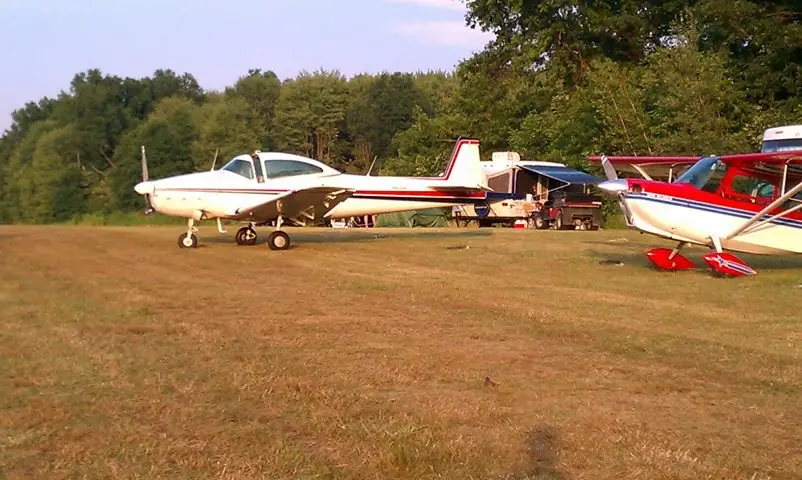
The annual Taylorcraft Fly-ins were the peak of the summer: vintage engines rumbling, good-natured arguments about Aeronca vs Taylorcraft vs Funk, and excited discussions about who was making the trip to Oshkosh that year.
Ryan, a regular from nearby Beach City, was always part of the scenery. Named after the aircraft manufacturer, he’d restored and rebuilt several Taylorcrafts over the years, including a rare four-place model people talked about like a mythical creature. His logbook held thousands of hours, almost all in taildraggers.
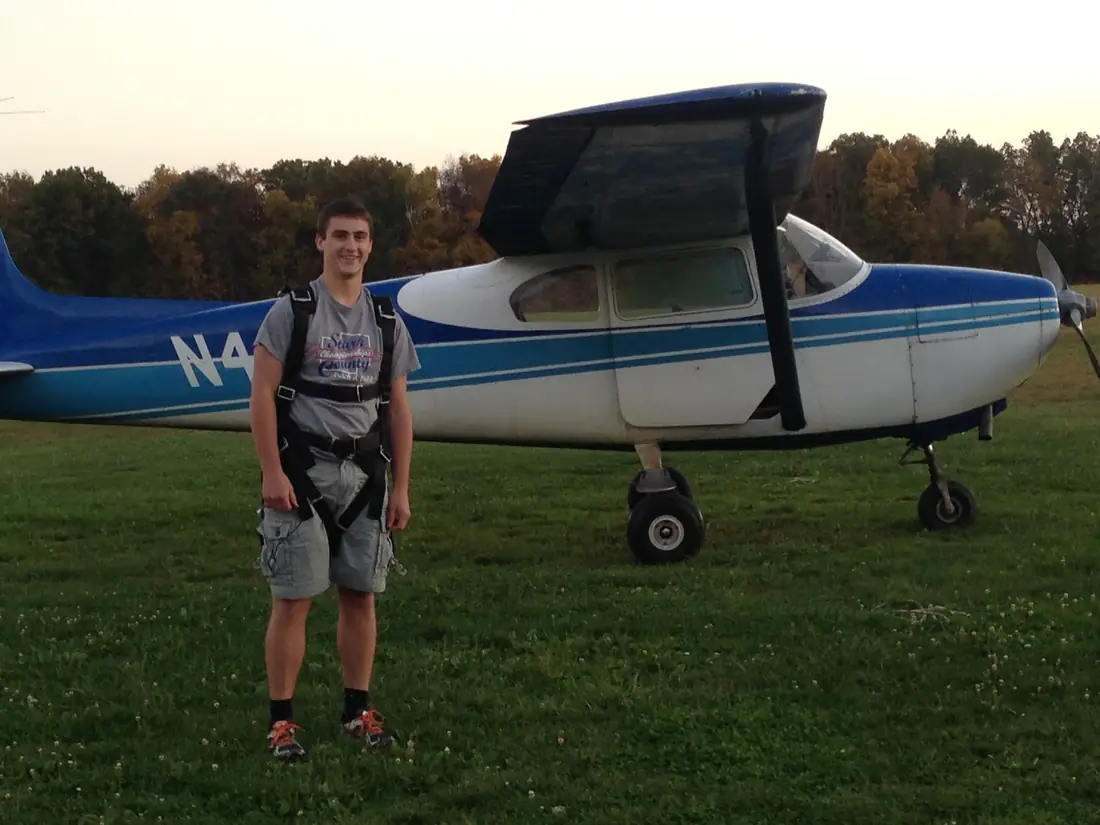
On the north side of the field, the skydivers ran their own parallel universe. These guys were sun-weathered adrenaline junkies who lived like aviation carnies out of well-traveled RVs, seemingly always arriving from somewhere or leaving for somewhere else, their nights ending with huge bonfires that threw shadows on the hangar walls.
To their east, the Balsa Bees had their own strip where RC enthusiasts, mostly dads in jorts and their sons, flew hand-built balsa creations.
Some afternoons, Daniel, Forrest’s grandson, and I would wander the property with metal detectors, convinced we were about to find buried treasure. Mostly we found old garden supplies and rusted bolts. Other days we’d fish the pond at the field’s edge with our shirts soaked in ice water, not doing much of anything, just listening to Cessnas pass overhead.
Forrest’s father, Al, had been a test pilot for Taylorcraft and carved the airfield out of Ohio farmland. The factory was right there. That lineage was part of the airport’s identity, and it drew a certain kind of person: pilots who flew for the pure, irrational love of it, the kind who’d spend grocery money on avgas. Forrest carried that legacy the way he wore his Taylorcraft trucker hat and mechanic shirts. It was just part of him. He could talk about aviation for hours. When the subject was Taylorcrafts, every word carried weight. When the subject was the FAA, his position was simple: “if you’re happy, they’re not happy.”
The old-timers loved telling stories about young Forrest’s mischievous streak. His favorite prank was yelling “Contact!” across the field, making anyone hand-propping an engine jump out of their skin. The reputation stuck, though the prankster had long since mellowed into the patient instructor I knew. He believed in osmosis, and he was right. Day by day, the airport taught me not just how to fly, but how to exist around other people. How to be useful. How to belong somewhere without performing.
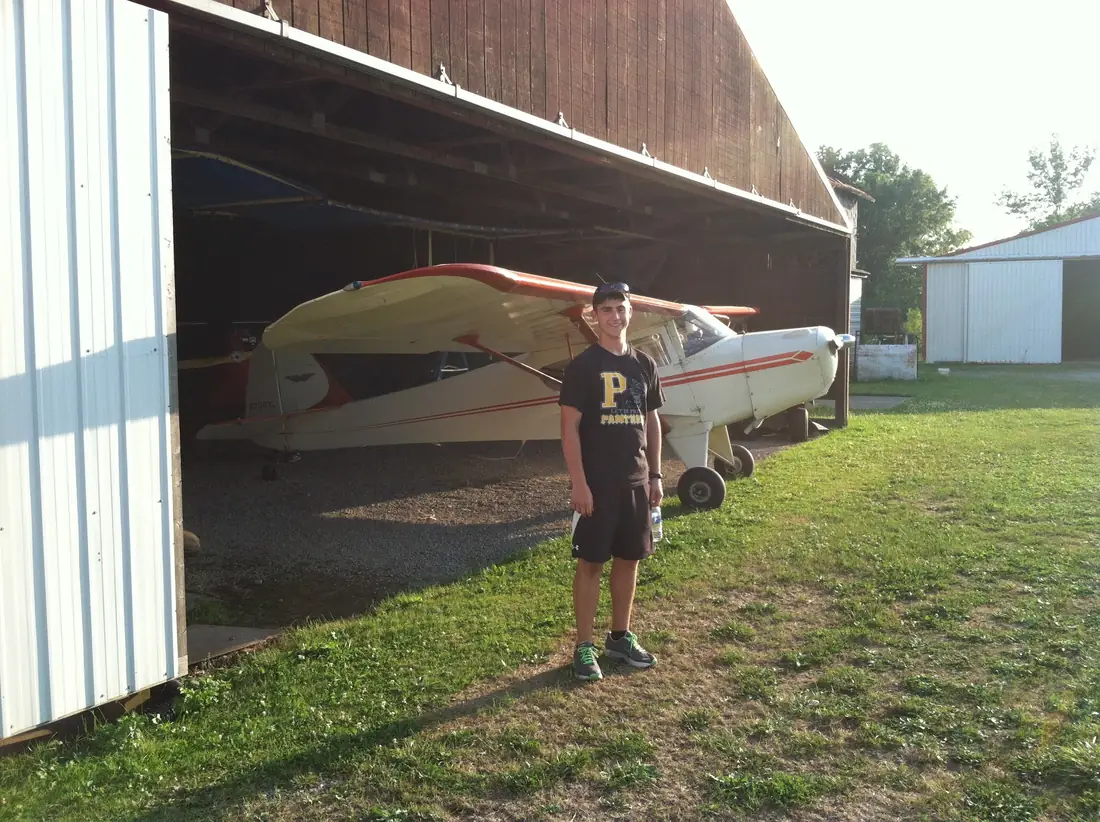
I wrote a brief essay about Barber Airport in high school. Its title was the first word of this essay. Reading it, it all feels so far away… it’s easy to forget just how much I loved that airport. And I didn’t articulate it super well back then.
I’ve lived a bit more now. And what I’d say is simpler. Barber Airport was the first place that accepted me exactly as I was. Awkward, quiet, weird, and obsessed with airplanes. I didn’t discover it by accident. I went to a Young Eagles rally when I was ten and I just kept showing up… and the place did the rest.
Most of the voices from those years have gone quiet. The ones that haven’t are older. But the imprint is permanent. How I listen to people, how I show up, how I think about what community actually means: I learned it there, from a collection of pilots and mechanics and storytellers in rusting hangars on a grass field in Ohio. Most of them had no idea they were teaching me anything.
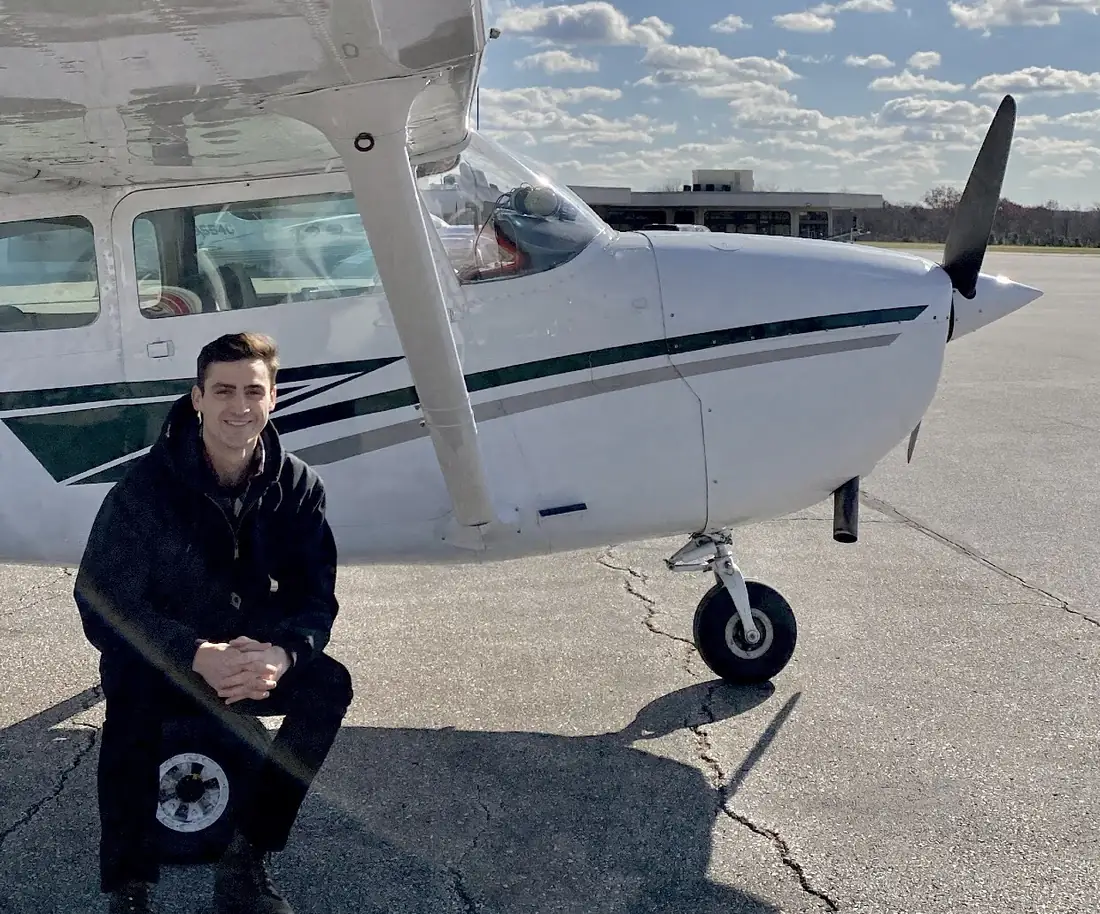
I still love planes. I still fly. Maybe someday I’ll take my nieces and nephews up and watch their faces from the left seat the way Forrest must have watched mine, that first time the wheels slowly left the grass and the ground just fell away. Maybe when I’m old enough, I’ll be the one telling the stories, trying to pass it along. And when I do, I’ll know exactly where it started.